Defective Hydraulic Controlled Component
- Check ABS fuses. Ensure brake lines are not kinked or leaking and brake fluid level is okay. Unplug pressure switch connector. Using an ohmmeter, check for continuity, If there is continuity, using ABS "T" Wrench (07HAA-SG00100), remove high pressure fluid from maintenance bleeder. See Fig 2
.
- Recheck pressure switch for continuity. If there is continuity, replace pressure switch. If there was no continuity in the previous 2 tests, ensure high pressure fluid is removed. Raise vehicle and support. Start engine and place into gear.
- With vehicle running 6 MPH or more, check pump motor operation. If pump motor does not operate, check relay. If relay is okay, connect a jumper wire between White wire and White/Blue wire on relay connector. Pump motor should run. If not, check wiring. If wiring is okay, check for short in pressure switch wiring.
- If pump motor operated in step 3, check if pump motor operates with increasing loud, raspy noise. If not, bleed system. If it does, motor should stop operating after approximately 60 seconds. If motor stops after 120 seconds, replace pressure switch.
- If motor stops operating after 60 seconds, check that fluid level in reservoir goes down and contains no air. Allow fluid to stabilize before checking. If there is air within system and level remains the same, using ABS "T" wrench, check fluid quantity by bleeding high pressure line.
- If fluid quantity is over 120 cc, replace accumulator. If fluid quantity is less than 70 cc, check for modulator inlet solenoid leak or accumulator leak. If fluid level up goes, replace modulator. If fluid level goes down in step 5, recheck pump motor.
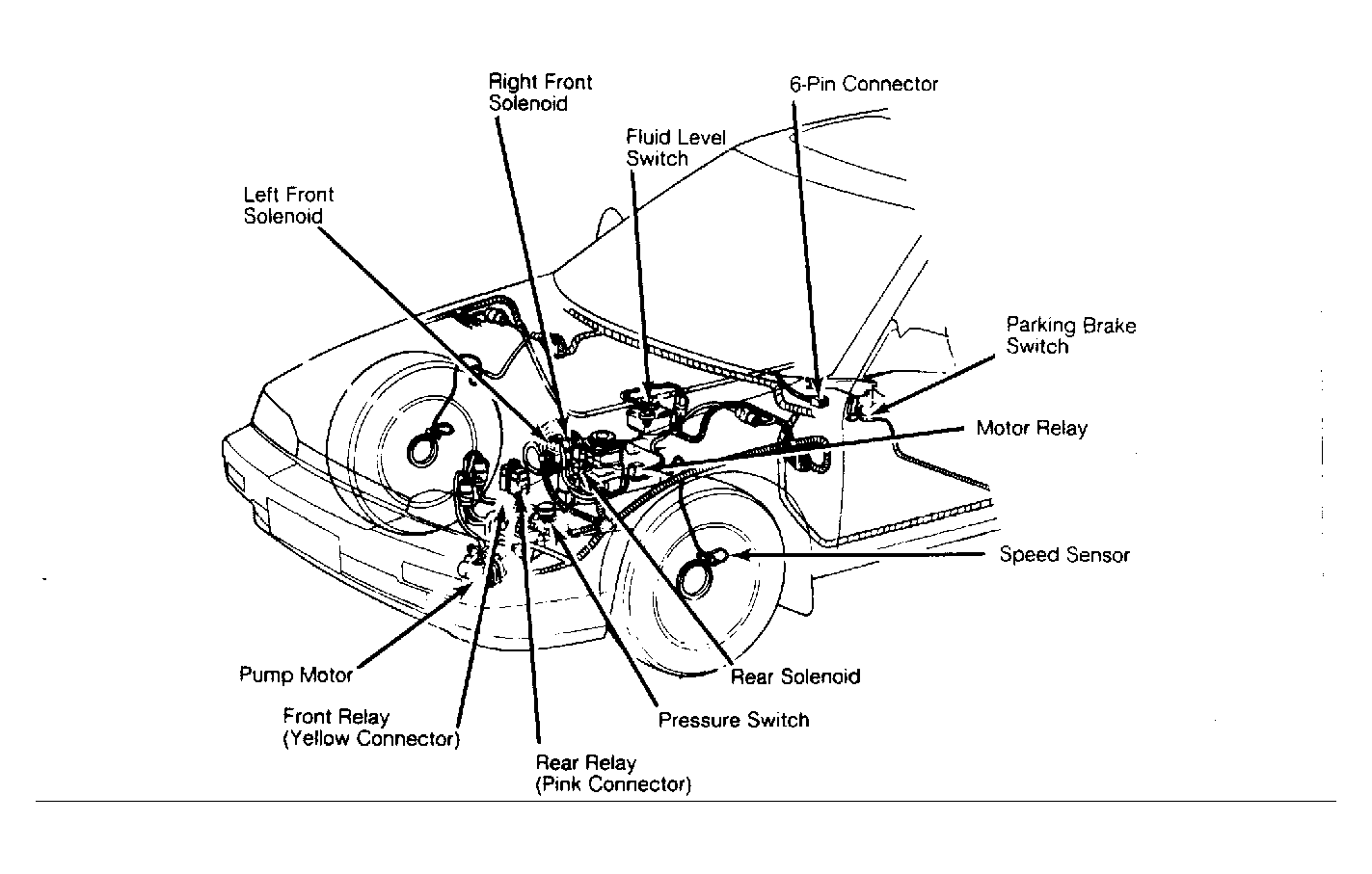 Courtesy of AMERICAN HONDA MOTOR CO., INC.
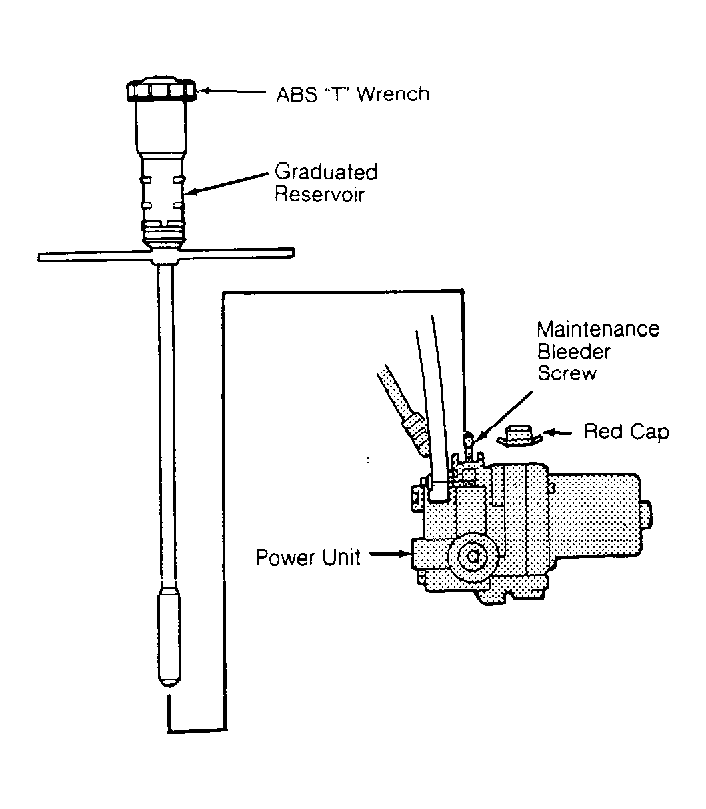 Courtesy of AMERICAN HONDA MOTOR CO., INC.