Verification Test
40/41TE (NGC) TRANSMISSION VERIFICATION TEST - VER 1
| 40/41TE (NGC) TRANSMISSION VERIFICATION TEST - VER 1 |
APPLICABILITY |
-
NOTE:
After completion of the Transmission Verification Test, the Powertrain Verification Test must be performed. Refer to the POWERTRAIN CATEGORY
.
- Connect the DRBIII® to the Data Link Connector (DLC).
- Reconnect any disconnected components.
- With the DRBIII®, erase all Transmission DTC's, also erase the PCM DTC's.
- Perform *PRNDL FAULT CLEARING PROCEDURE
after completion of repairs for P0706 CHECK SHIFTER SIGNAL.
- With the DRBIII®, display Transmission Temperature. Start and run the engine until the Transmission Temperature is HOT, above 43°C or 110°F.
- Check the transmission fluid and adjust if necessary. Refer to the Service Information for the Fluid Fill procedure.
-
NOTE:
If the Transmission Control Module or Torque Converter has been replaced, or if the Transmission has been repaired or replaced, it is necessary to perform the DRBIII® QUICK LEARN
Procedure and reset the "Pinion Factor ".
- Road test the vehicle. With the DRBIII®, monitor the engine RPM. Make 15 to 20 1-2, 2-3, 3-4 upshifts. Perform these shifts from a standing start to 45 MPH with a constant throttle opening of 20 to 25 degrees.
- Below 25 MPH, make 5 to 8 wide open throttle kickdowns to 1st gear. Allow at least 5 seconds each in 2nd and 3rd gear between each kickdown.
- For a specific DTC, drive the vehicle to the Symptom's When Monitored and Set Conditions to verify the DTC is repaired.
- If equipped with AutoStick®, upshift and downshift several times using the AutoStick® feature during the road test.
-
NOTE:
Use the EATX OBDII task manager to run Good Trip time in each gear, this will confirm the repair and to ensure that the DTC has not re-matured.
- Check for Diagnostic Trouble Codes (DTC's) during the road test. If a DTC sets during the road test, return to the Symptom list and perform the appropriate test.
-
NOTE:
Erase P0700 DTC in the PCM to turn the MIL light off after making transmission repairs.
Were there any Diagnostic Trouble Codes set during the road test?
Yes --> Repair is not complete, refer to the appropriate test.
No --> Repair is complete. |
All |
BODY VERIFICATION TEST - VER 1
| BODY VERIFICATION TEST - VER 1 |
APPLICABILITY |
- Disconnect all jumper wires and reconnect all previously disconnected components and connectors.
-
NOTE:
If the SKIM or PCM/ECM was replaced, refer to the service information for proper programming procedures.
-
NOTE:
PT27 ONLY: If a Window Regulator Module was replaced, close both doors, raise both door windows fully up and hold the switch in the up position for 2 additional seconds then use the DRBIII to "Initialize Module".
- Program all RKE transmitters and other options as necessary.
- Ensure that all accessories are turned off and the battery is fully charged.
- With the DRBIII®, record and erase all DTC's from ALL modules. Start and run the engine for 2 minutes. Operate all functions of the system that caused the original concern.
- Turn the ignition off and wait 5 seconds. Turn the ignition on and using the DRBIII®, read DTC's from ALL modules.
Are any DTC's present or is the original condition still present?
Yes --> Repair is not complete, refer to the appropriate test.
No --> Repair is complete. |
All |
CHARGING VERIFICATION - VER-3
| CHARGING VERIFICATION - VER-3 |
APPLICABILITY |
- Inspect the vehicle to ensure that all engine components are properly installed and connected. Reassemble and reconnect components as necessary.
- With the DRB, erase all diagnostic trouble codes (DTCs).
- Start the engine.
- Raise the engine speed to 2000 RPM for at least 30 seconds.
- Allow the engine to idle.
- Turn the ignition off for 20 seconds.
- Turn the ignition on.
- With the DRB, read ECM DTCs.
- If this DTC has set again, or another DTC has set, look for any Technical Service Bulletins (TSBs) that may relate to this condition. Return to the Symptom List if necessary.
- If the charging system is functioning correctly and there are no DTCs, the repair is now complete.
Are any DTCs or symptoms remaining?
Yes --> Repair is not complete, refer to appropriate test.
No --> Repair is complete. |
All |
NO START VERIFICATION - VER-1
| NO START VERIFICATION - VER-1 |
APPLICABILITY |
-
NOTE:
IMPORTANT! If the Engine Control Module or Sentry Key Immobilizer Module has been replaced, ensure the programming procedure for the module has been performed in accordance with the Service Information.
- Inspect the vehicle to ensure that all engine components are properly installed and connected. Reassemble and reconnect components as necessary.
- Inspect the engine oil for contamination. If it is contaminated, change the oil and filter.
- With the DRB, erase all diagnostic trouble codes (DTCs).
- Turn the ignition off for at least 10 seconds.
- Attempt to start the engine.
- If the engine is unable to start, look for any Technical Service Bulletins (TSBs) that may relate to this condition. Return to the Symptom List if necessary.
- If the engine starts and continues to run, the repair is now complete.
Are any DTCs or symptoms remaining?
Yes --> Repair is not complete, refer to appropriate test.
No --> Repair is complete. |
All |
POWERTRAIN VERIFICATION TEST VER-1 - 1.6L
| POWERTRAIN VERIFICATION TEST VER-1 - 1.6L |
APPLICABILITY |
-
NOTE:
If the PCM has been replaced, it must be programmed with the latest calibration before continuing.
-
NOTE:
If the PCM has been replaced and the correct VIN and mileage have not been programmed, a DTC will be set in the ABS Module, Airbag Module and the SKIM.
-
NOTE:
If the vehicle is equipped with a Sentry Key Immobilize!- System, Secret Key data must be updated. Refer to the Service Information for the PCM, SKIM and the Transponder (ignition key) for programming information.
- Inspect the vehicle to ensure that all components related to the repair are connected properly.
- Inspect the engine oil for fuel contamination. Replace the oil and filter as necessary.
- Attempt to start the engine.
- If the No Start condition is still present, refer to the symptom list and perform the diagnostic testing as necessary, refer to any Technical Service Bulletins (TSB) that may apply.
- Run the engine for one warm-up cycle to verify operation.
- With the DRBIII®, confirm that no DTCs are present and that all components are functioning properly.
- If a DTC is present, refer to the appropriate category and select the corresponding test.
Are any DTCs present?
Yes --> Repair is not complete, refer to appropriate test.
No --> Repair is complete. |
All |
POWERTRAIN VERIFICATION TEST VER - 1 - NGC
| POWERTRAIN VERIFICATION TEST VER - 1 - NGC |
APPLICABILITY |
-
NOTE:
After completing the Powertrain Verification Test the Transmission Verification Test must be performed.
-
NOTE:
If the PCM has been replace and the vehicle is equipped with a 2.4L Turbo, Manual Transmission, the Pinion Factor MUST be programmed into the PCM. Failure to do so will cause the speedometer to become inoperative or inaccurate.
-
NOTE:
If the PCM has been replaced and the correct VIN and mileage have not been programmed, a DTC will be set in the ABS Module, Airbag Module and the SKIM.
-
NOTE:
If the vehicle is equipped with a Sentry Key Immobilize! System, Secret Key data must be updated. Refer to the Service Information for the PCM, SKIM and the Transponder (ignition key) for programming information.
- Inspect the vehicle to ensure that all components related to the repair are connected properly.
- Inspect the engine oil for fuel contamination. Replace the oil and filter as necessary.
- Attempt to start the engine.
- If the No Start condition is still present, refer to the appropriate test and perform the diagnostic testing as necessary, refer to and Technical Service Bulletins (TSB) that may apply.
- Run the engine for one warm-up cycle to verify operation.
- With the DRBIII®, confirm that no DTCs or Secondary Indicators are present and that all components are functioning properly.
- If a DTC is present, refer to the appropriate category and select the corresponding symptom.
Are any DTCs present?
Yes --> Repair is not complete, refer to appropriate test.
No --> Repair is complete. |
All |
POWERTRAIN VERIFICATION TEST VER - 2 - 1.6L
| POWERTRAIN VERIFICATION TEST VER - 2 - 1.6L |
APPLICABILITY |
-
NOTE:
If the PCM has been replaced and the correct VIN and mileage have not been programmed, a DTC will be set in the ABS Module, Airbag Module and the SKIM.
-
NOTE:
If the vehicle is equipped with a Sentry Key Immobilize System, Secret Key data must be updated. Refer to the Service Information for the PCM, SKIM and the Transponder (ignition key) for programming information.
- Inspect the vehicle to ensure that all components related to the repair are connected properly.
- With the DRBIII®, clear DTCs and Reset Memory for all engine values.
- Run the engine for one warm-up cycle to verify proper operation.
- Road test the vehicle. Use all accessories that may be related to this repair.
- With the DRBIII®, confirm that no DTC's are present and that all components are functioning properly.
- If this test is being performed after a No Trouble Code test, verify the symptom is no longer present.
- If the symptom is still present, or any other symptom or DTC is present refer to the appropriate category and perform the corresponding test.
- Refer to any Technical Service Bulletins (TSB) that may apply.
- If there are no DTCs present and all components are functional properly, the repair is complete.
Are any DTCs present?
Yes --> Repair is not complete, refer to appropriate test.
No --> Repair is complete. |
All |
POWERTRAIN VERIFICATION TEST VER - 2 - NGC
| POWERTRAIN VERIFICATION TEST VER - 2 - NGC |
APPLICABILITY |
-
NOTE:
After completing the Powertrain Verification Test the Transmission Verification Test must be performed.
-
NOTE:
If the PCM has been replace and the vehicle is equipped with a 2.4L Turbo, Manual Transmission, the Pinion Factor MUST be programmed into the PCM. Failure to do so will cause the speedometer to become inoperative or inaccurate.
-
NOTE:
If the PCM has been replaced and the correct VIN and mileage have not been programmed, a DTC will be set in the ABS Module, Airbag Module and the SKIM.
-
NOTE:
If the vehicle is equipped with a Sentry Key Immobilize!- System, Secret Key data must be updated. Refer to the Service Information for the PCM, SKIM and the Transponder (ignition key) for programming information.
- Inspect the vehicle to ensure that all components related to the repair are connected properly.
- With the DRBIII®, clear DTCs and Reset Memory all engine values.
- Run the engine for one warm-up cycle to verify proper operation.
- Road test the vehicle. Use all accessories that may be related to this repair.
- With the DRBIII®, confirm that no DTC's or Secondary Indicators are present and that all components are functioning properly.
- If this test is being performed after a No Trouble Code test, verify the symptom is no longer present.
- If the symptom is still present, or any other symptom or DTC is present refer to the appropriate category and perform the corresponding test.
- Refer to any Technical Service Bulletins (TSB) that may apply.
- If there are no DTCs present and all components are functional properly, the repair is complete.
Are any DTCs present?
Yes --> Repair is not complete, refer to appropriate test.
No --> Repair is complete. |
All |
POWERTRAIN VERIFICATION TEST VER - 3 - 1.6L
| POWERTRAIN VERIFICATION TEST VER - 3 - 1.6L |
APPLICABILITY |
-
NOTE:
If the PCM has been replaced and the correct VIN and mileage have not been programmed, a DTC will be set in the ABS Module, Airbag Module and the SKIM.
-
NOTE:
If the vehicle is equipped with a Sentry Key Immobilize!- System, Secret Key data must be updated. Refer to the Service Information for the PCM, SKIM and the Transponder (ignition key) for programming information.
- Inspect the vehicle to ensure that all components related to the repair are connected properly.
- With the DRBIII®, clear DTCs.
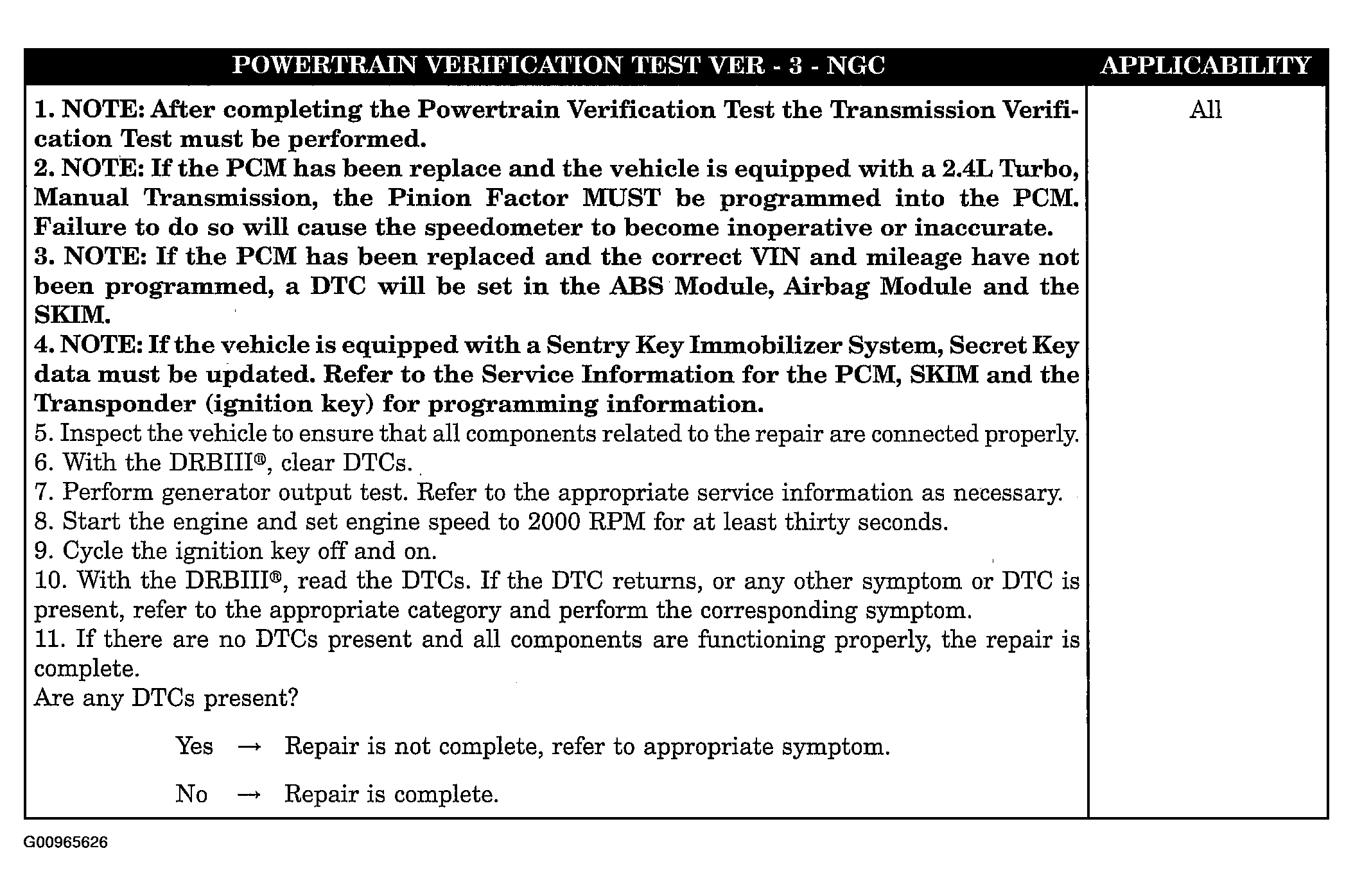
- Perform generator output test. Refer to CHARGING
.
- Start the engine and set engine speed to 2000 RPM for at least thirty seconds.
- Cycle the ignition key off and on.
- With the DRBIII®, read the DTCs. If the DTC returns, or any other symptom or DTC is present, refer to the appropriate category and perform the corresponding test.
- If there are no DTCs present and all components are functioning properly, the repair is complete.
Are any DTCs present?
Yes --> Repair is not complete, refer to appropriate test.
No --> Repair is complete. |
All |
 Courtesy of DAIMLERCHRYSLER CORP.
 POWERTRAIN VERIFICATION TEST VER - 4
| POWERTRAIN VERIFICATION TEST VER - 4 |
APPLICABILITY |
-
NOTE:
If the PCM has been replaced, and the correct VIN and mileage have not been programmed, a DTC will be set in the ABS Module, Airbag Module and the SKIM.
-
NOTE:
If the vehicle is equipped with a Sentry Key Immobilize!- System, Secret Key data must be updated. Refer to the Service Information for the PCM, SKIM and the Transponder (ignition key) for programming information.
- Inspect the vehicle to make sure that all components are properly installed and connected.
- Using the DRBIII®, clear all DTCs.
- Turn the Speed Control ON (if equipped, cruise light will be on).
- Make sure vehicle speed is greater than 35 MPH.
- Move the Speed Control switch to the COAST/SET position. The Speed Control should engage and maintain vehicle speed.
- Move the Speed Control switch to RESUME/ACCEL position. The vehicle speed should increase by at least 2 mph.
- Using caution, lightly press then release the brake pedal. The speed control should disengage.
- Make sure vehicle speed is greater than 35 MPH.
- Move the Speed Control Switch to the RESUME/ACCEL position. The vehicle should resume the previously set speed.
- Move the Speed Control switch to the Coast/Set position. The vehicle should decelerate and maintain the new vehicle speed after deceleration.
- Make sure vehicle speed is greater than 35 MPH and Speed Control is engaged.
- Move the Speed Control switch to the CANCEL position. The Speed Control should disengage.
- Make sure vehicle speed is greater than 35 MPH and Speed Control is engaged.
- Turn the Speed Control OFF. The Speed Control should disengage.
- If the vehicle passes all tests, the Speed Control system is functioning as designed. The repair is complete.
- If the vehicle does not pass all tests, the repair is not complete. Refer to any TSBs that may apply and, if necessary, return to the Symptom List.
Did the Speed Control pass the above test?
Yes --> Repair is complete.
No --> Repair is not complete, refer to appropriate test. |
All |
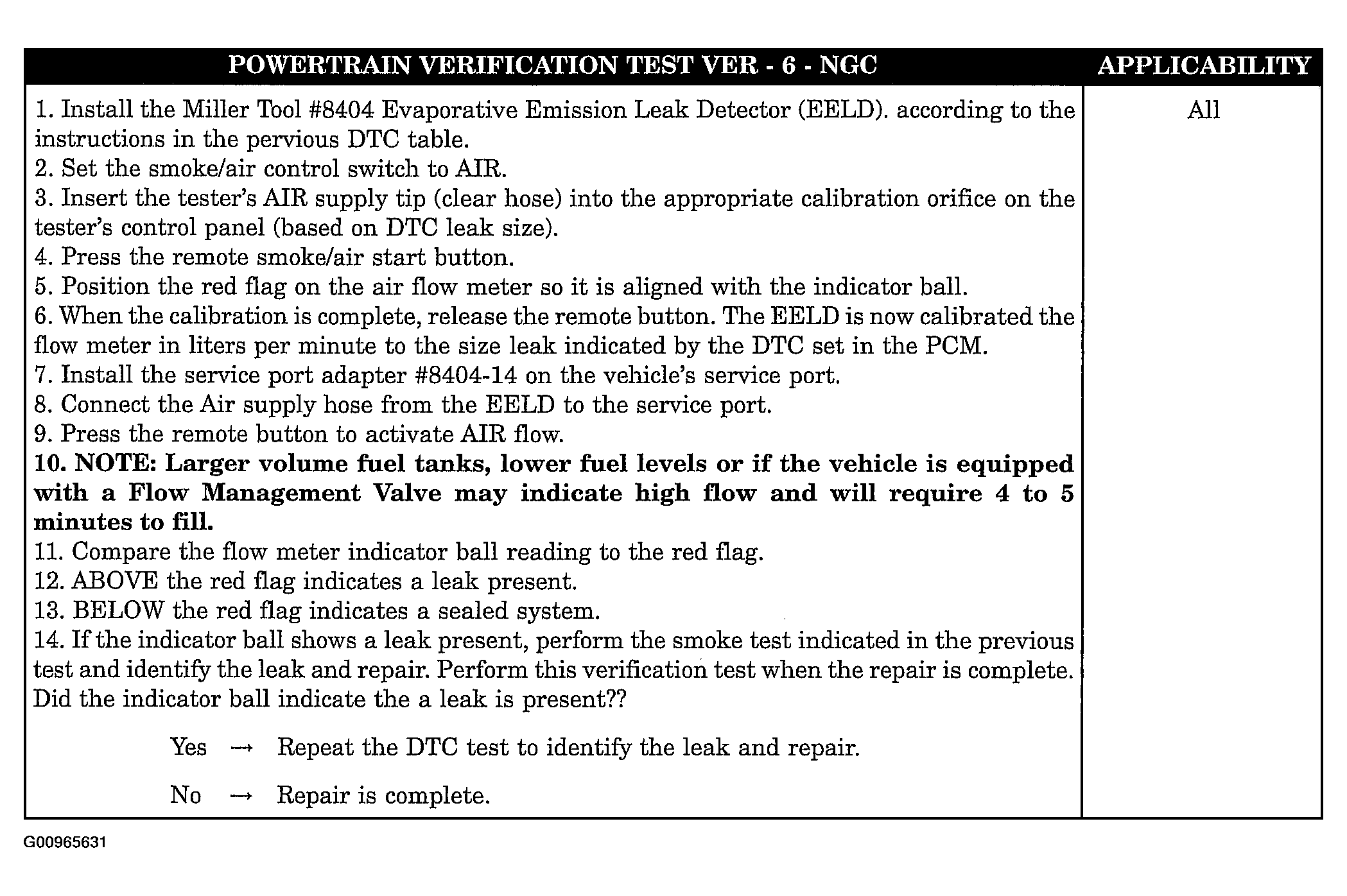
POWERTRAIN VERIFICATION TEST VER - 5 - 1.6L
| POWERTRAIN VERIFICATION TEST VER - 5 - 1.6L |
APPLICABILITY |
-
NOTE:
If the PCM has been replaced, and the correct VIN and mileage have not been programmed, a DTC will be set in the ABS Module, Airbag Module and the SKIM.
-
NOTE:
If the vehicle is equipped with a Sentry Key Immobilize!- System, Secret Key data must be updated. Refer to the Service Information for the PCM, SKIM and the Transponder (ignition key) for programming information.
- Inspect the vehicle to ensure that all engine components are properly installed and connected. Reassemble and reconnect components as necessary.
- Connect the DRBIII® to the data link connector.
- Ensure the fuel tank has at least a quarter tank of fuel. Turn off all accessories.
- If a Comprehensive Component DTC was repaired, perform steps 5 - 8. If a Major OBDII Monitor DTC was repaired skip those steps and continue verification.
- After the ignition has been off for at least 10 seconds, restart the vehicle and run 2 minutes.
- If the Good Trip Indicator changed to YES and no DTCs have set, the repair was successful and is now complete. Erase DTC's and disconnect the DRBIII®.
- If the repaired DTC has reset, the repair is not complete. Check for any related TSB's or flash updates and return to the Symptom list.
- If another DTC has set, return to the Symptom List and follow the path specified for that DTC.
- With the DRBIII®, monitor the appropriate OBDII Monitor pre-test screen until all enabling conditions have been met, then switch to the appropriate monitor screen and observe the OBDII monitor in progress.
- If the monitor passed and the Good Trip Indicator changed to YES, the repair was successful and is now complete. Erase DTC's and disconnect the DRBIII®.
- If the repaired OBDII DTC has reset or the OBDII monitor ran and did not pass, the repair is not complete. Check for any related technical service bulletins or flash updates and return to Symptom List.
- If another DTC has set, return to the Symptom List and follow the path specified for that DTC.
Are any DTCs present?
Yes --> Repair is not complete, refer to appropriate test.
No --> Repair is complete. |
All |
 Courtesy of DAIMLERCHRYSLER CORP.
 ROAD TEST VERIFICATION - VER-2
| ROAD TEST VERIFICATION - VER-2 |
APPLICABILITY |
- Inspect the vehicle to ensure that all engine components are properly installed and connected. Reassemble and reconnect components as necessary.
- If this verification procedure is being performed after a non-DTC test, perform steps 3 and 4. If not, proceed to step 5.
- Check to see if the initial symptom still exists. If there are no trouble codes and the symptom no longer exists, the repair was successful and testing is now complete.
- If the initial or another symptom exists, the repair is not complete. Check all pertinent Technical Service Bulletins (TSBs) and return to the Symptom List if necessary.
- For previously read DTCs that have not been dealt with, return to the Symptom List and follow the diagnostic path for that DTC; otherwise, continue.
- If the Engine Control Module (ECM) has not been changed, perform steps 7 and 8, otherwise, continue with step 9.
- With the DRB III®, erase all diagnostic trouble codes (DTCs), then disconnect the DRB III®.
- Turn the ignition off for at least 10 seconds.
- If equipped with a Transfer Case Position Switch, perform step 10, otherwise, continue with step 11.
- With the ignition switch on, place the Transfer Case Shift Lever in each gear position, stopping for 15 seconds in each position.
- Ensure no DTCs remain by performing steps 12 through 15.
- Road test the vehicle. For some of the road test, go at least 64 km/h (40 MPH). If this test is for an A/C Relay Control Circuit, drive the vehicle for at least 5 minutes with the A/C on.
- At some point, stop the vehicle and turn the engine off for at least 10 seconds, then restart the engine and continue.
- Upon completion of the road test, turn the engine off and check for DTCs with the DRB III®.
- If the repaired DTC has set again, the repair is not complete. Check for any pertinent Technical Service Bulletins (TSBs) and return to the Symptom List. If there are no DTCs, the repair was successful and is now complete.
Are any DTCs or symptoms remaining?
Yes --> Repair is not complete, refer to appropriate test.
No --> Repair is complete. |
All |
SKIS VERIFICATION
| SKIS VERIFICATION |
APPLICABILITY |
- Reconnect all previously disconnected components and connectors.
- Obtain the vehicle's unique Personal Identification Number (PIN) assigned to it's original SKIM. This number can be obtained from the vehicle's invoice or Chrysler's Customer Center (1-800-992-1997).
-
NOTE:
When entering the PIN, care should be taken because the SKIM will only allow 3 consecutive attempts to enter the correct PIN. If 3 consecutive incorrect PIN's are entered the SKIM will Lock Out the DRB III for 1 hour.
- To exit Lock Out mode, the ignition key must remain in the Run position continually for 1 hour. Turn off all accessories and connect a battery charger if necessary.
- With the DRB III, select Theft Alarm, SKIM and Miscellaneous. Then select desired procedure and follow the steps that will be displayed.
- If the SKIM has been replaced, ensure all of the vehicle ignition keys are programmed to the new SKIM.
-
NOTE:
Prior to returning vehicle to the costumer, perform a module scan to be sure that all DTC's are erased. Erase any DTC's that are found.
- With the DRB III erase all DTC's. Perform 5 ignition key cycles leaving the key on for at least 90 seconds per cycle.
- With the DRB III, read the SKIM DTC's.
Are there any SKIM DTC's?
Yes --> Repair is not complete, refer to appropriate test.
No --> Repair is complete. |
All |
SPEED CONTROL VERIFICATION - VER-4
| SPEED CONTROL VERIFICATION - VER-4 |
APPLICABILITY |
- Inspect the vehicle to ensure that all engine components are properly installed and connected. Reassemble and reconnect components as necessary.
- With the DRB, erase all diagnostic trouble codes (DTCs).
- Road test the vehicle at a speed above 60 km/h (35 MPH).
- Turn the speed control ON/OFF switch on.
- Depress and release the SET switch. If the speed control does not engage, the repair is not complete, continue with step 12.
- Quickly depress and release the RESUME/ACCEL switch. If the vehicle speed does not increase by 3 km/h (2 MPH), the repair is not complete, continue with step 12.
- Using caution, depress and release the brake pedal. If the speed control does not disengage, the repair is not complete, continue with step 12.
- With the vehicle speed at least 60 km/h (35 MPH), depress the RESUME/ACCEL switch. If the speed control does not resume at the previously set speed, the repair is not complete, continue with step 12.
- Hold down the COAST switch. If the vehicle does not decelerate, the repair is not complete, continue with step 12.
- While still holding down the COAST switch, ensure the vehicle speed is at least 60 km/h (35 MPH) and release the COAST switch. If the vehicle does not adjust and set a new vehicle speed, the repair is not complete, continue with step 12.
- With the speed control engaged, depress the ON/OFF switch. If the speed control does not disengage, the repair is not complete, continue with step 12.
- If the vehicle did not successfully perform all of the previous steps, check for Technical Service Bulletins (TSBs) that pertain to this speed control problem and then, if necessary, return to the Symptom List.
- If the vehicle successfully performed all of the previous steps, the speed control system is now functioning as designed. The repair is now complete.
Are any DTCs or symptoms remaining?
Yes --> Repair is not complete, refer to appropriate test.
No --> Repair is complete. |
All |