Intake Air Control Valve System: 3.0L
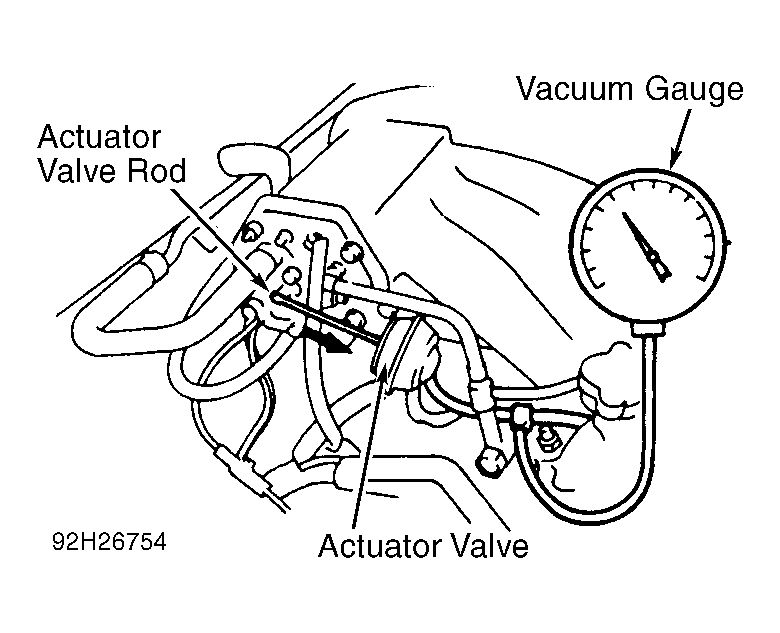
- Using 3-way connector, connect vacuum gauge to actuator valve. See Fig 1. Start engine. With engine idling, ensure no vacuum reading is obtained.
- Fully open throttle and ensure vacuum reading momentarily reads approximately 8 in. Hg and actuator valve rod pulls inward. If actuator valve rod does not pull inward, go to next step.
 Courtesy of © TOYOTA, LICENSE AGREEMENT TMS1002
- Disconnect vacuum hose from actuator valve. Using vacuum pump, apply approximately 8 in. Hg of vacuum to actuator valve. Ensure actuator valve rod pulls inward and remains pulled inward for at least one minute. Replace actuator valve if defective. If actuator valve operates correctly, reconnect vacuum hose and go to next step.
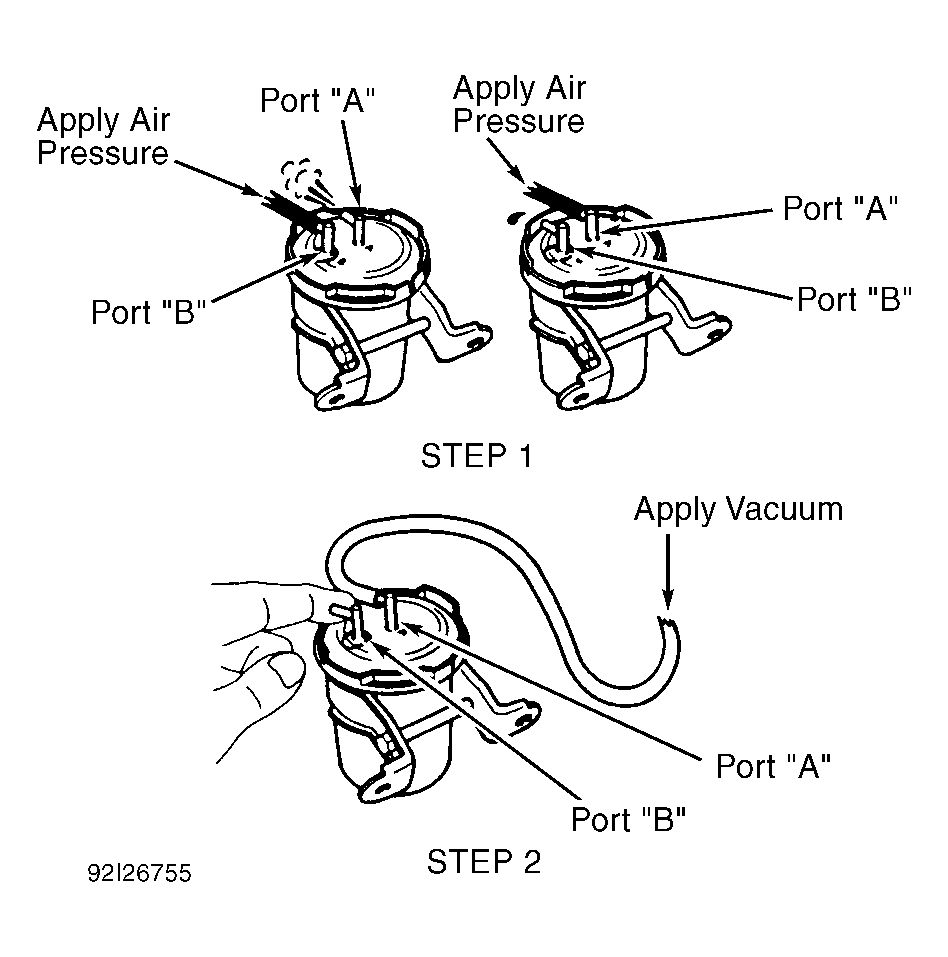
- Disconnect hoses from vacuum tank, located near driver's side headlight in engine compartment. Apply air pressure to port "B" on vacuum tank. Ensure air passes out port "A". Perform STEP 1. See Fig 2. Apply air pressure to port "A". Ensure air does not pass out port "B". Perform STEP 1. See Fig 2.
- Plug port "B" on vacuum tank. Using vacuum pump, apply approximately 8 in. Hg of vacuum to port "A". Perform STEP 2. See Fig 2. Ensure vacuum reading will hold for at least one minute. Replace vacuum tank if defective and recheck system operation. If vacuum tank is okay, reconnect vacuum hoses and go to next step.
 Courtesy of © TOYOTA, LICENSE AGREEMENT TMS1002
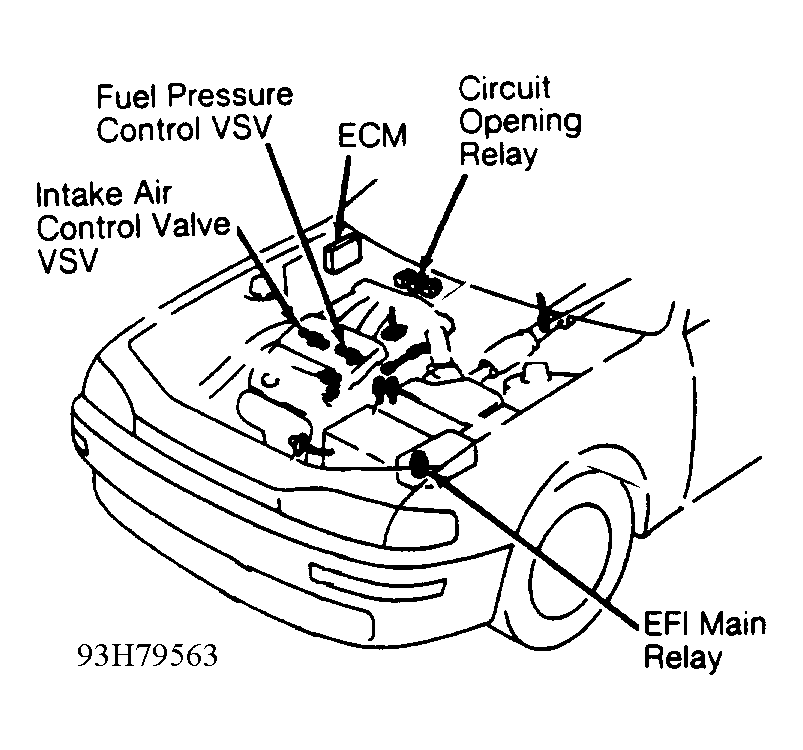
- Disconnect electrical connectors from intake air control valve Vacuum Switching Valve (VSV), located near valve cover. See Fig 3. Using ohmmeter, ensure continuity exists between electrical terminals on VSV and resistance is 33-39 ohms. Check that no continuity exists between each electrical terminal and the body of the VSV.
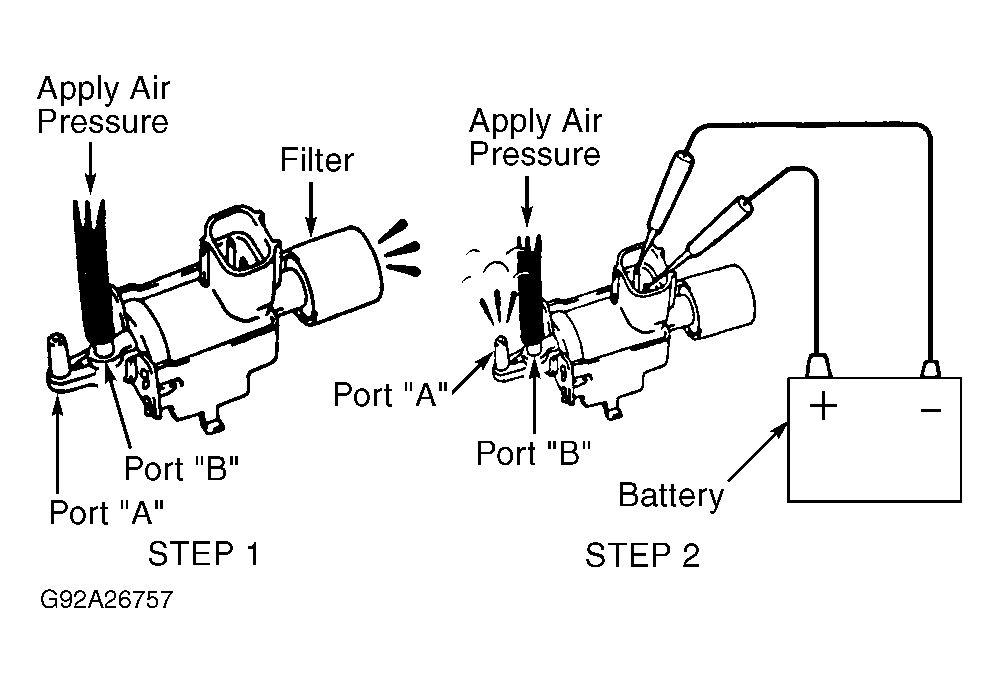
- Apply air pressure to port "B". Ensure air passes out the filter. Perform STEP 1. See Fig 4. Connect battery voltage to VSV terminals. Apply air pressure to port "B" and ensure air passes out port "A". Perform STEP 2. See Fig 4. Replace VSV if defective and recheck system operation.
- If VSV is okay, check for defective wiring circuit to VSV. See appropriate wiring diagram in WIRING DIAGRAMS
article.
- The Engine Control Module (ECM) controls the intake air control valve VSV ground circuit on the Blue/Green wire. ECM is located behind glove box. If necessary to check EFI main relay, see EFI MAIN RELAY under RELAYS. Repair as necessary and recheck system operation.
 Courtesy of © TOYOTA, LICENSE AGREEMENT TMS1002
 Courtesy of © TOYOTA, LICENSE AGREEMENT TMS1002