Camshaft Position Sensor
- Ensure ignition is off. Remove rotor from distributor housing. Remove ignition coil dust cover and gasket from distributor housing. Remove 2 nuts and 4 wires from ignition coil terminals.
- Remove 3 screws and 3 wires from igniter terminals. Remove 2 screws and igniter from distributor housing. Remove 2 connectors from harness retainer. Remove distributor wire from housing. Remove screw and noise suppressor condenser from housing.
- Using ohmmeter, measure resistance of distributor connector C1, when cold (14-104°F; -10-50°C), between terminals No. 3 and 6. See Fig 1
. Camshaft Position (CMP) sensor resistance should be 185-275 ohms. If resistance is not as specified, replace distributor housing.
- Measure resistance of distributor connector C1, when cold, between terminals No. 2 and 5. CMP sensor resistance should be 370-550 ohms. If resistance is not as specified, replace distributor housing.
- Measure resistance of distributor connector C1, when hot (104-212°F; 50-100°C), between terminals No. 3 and 6. CMP sensor resistance should be 240-325 ohms. If resistance is not as specified, replace distributor housing.
- Measure resistance of distributor connector C1, when hot, between terminals No. 2 and 5. CMP sensor resistance should be 475-650 ohms. If resistance is not as specified, replace distributor housing.
- Measure air gap between signal rotor and camshaft position sensor. Air gap should be .008-.016" (.2-.4 mm). If air gap is not as specified, replace distributor housing. When testing is complete, reverse disassembly procedure.
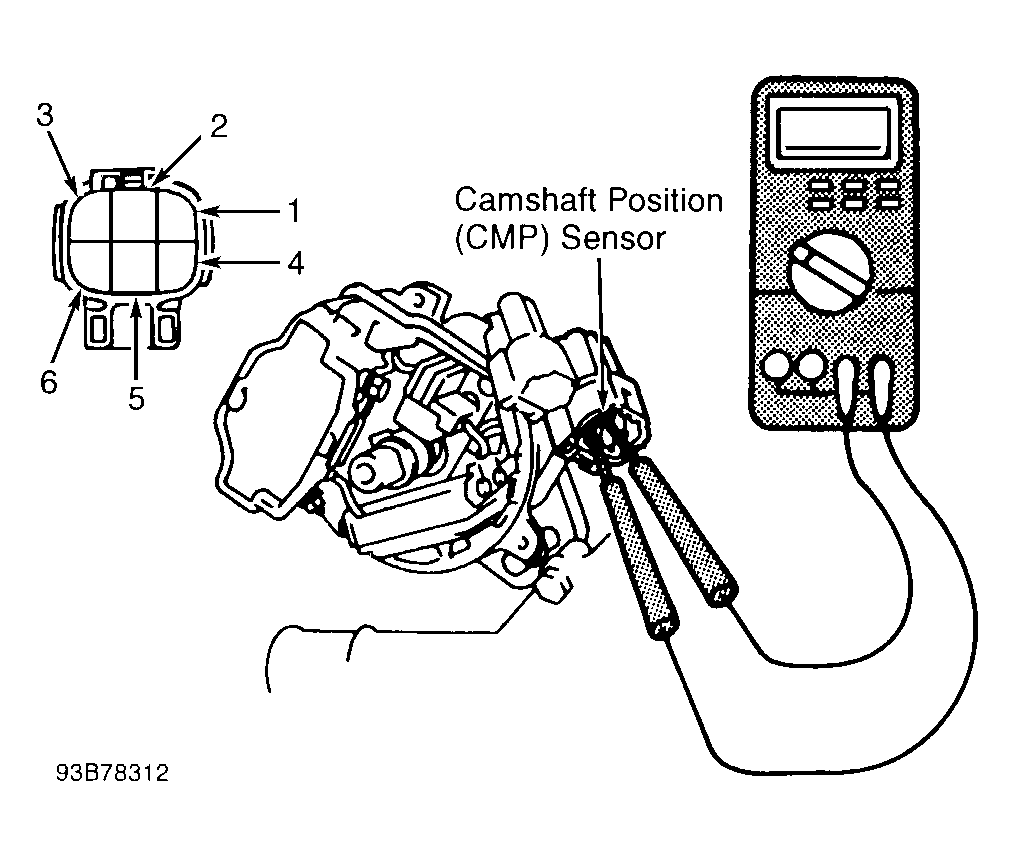 Courtesy of GENERAL MOTORS CORP.