Pressure Test
- Ensure battery voltage is more than 12 volts. Disconnect negative battery cable. Disconnect wiring connector from cold start injector. Loosen the union bolt of cold start injector hose on fuel delivery pipe.
- With shop towel under delivery pipe fitting, remove the bolt and 2 gaskets from the delivery pipe. Drain fuel in delivery pipe. Install fuel pressure gauge. See Fig 1 or Fig 2
. Wipe off spilled fuel and reconnect negative battery cable. On Cressida and MR2 models, insert jumper wire between terminals "Fp" and "+ B" of service connector. On all other models, install jumper wire between both terminals of fuel pump check connector. See Figure. Turn ignition on.
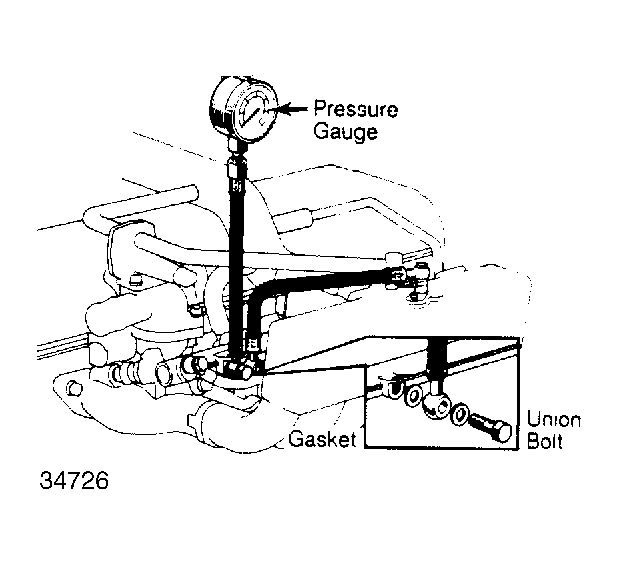 Courtesy of © TOYOTA, LICENSE AGREEMENT TMS1002
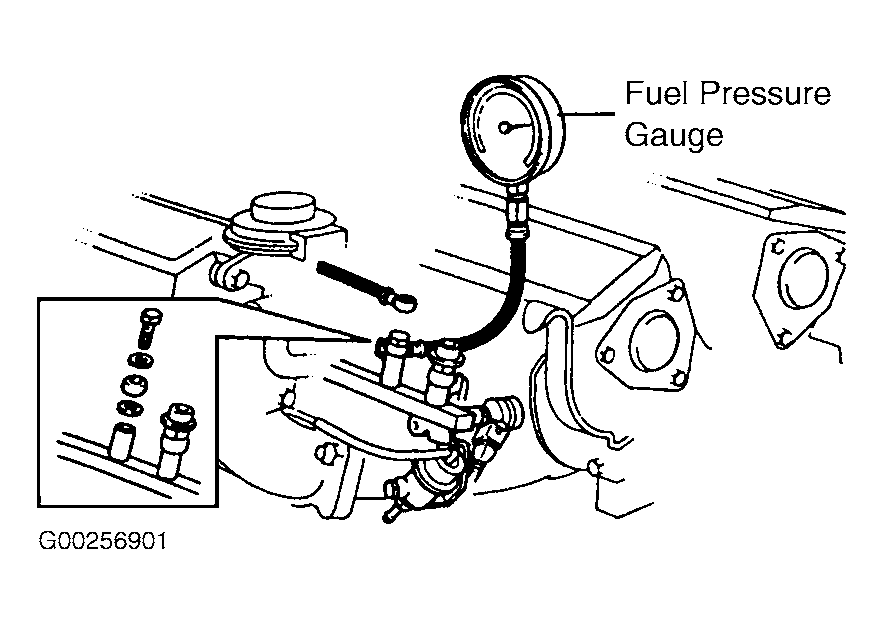 Courtesy of © TOYOTA, LICENSE AGREEMENT TMS1002
- Fuel pump check connector is near master cylinder on Pickup and 4Runner models, at right rear corner of engine compartment on Corolla GTS models and near airflow meter on Van and Celica Supra models.
- Measure fuel pressure. Fuel pressure should be 33-38 psi (2.3-2.7 kg/cm2
). If pressure is high, replace pressure regulator. If pressure is low, check the following:
- Fuel filter
- Fuel hoses and connections
- Fuel pump
- Pressure regulator
- Remove jumper wire from service connector. Disconnect pressure regulator sensing hose. Start engine. With engine idling, fuel pressure should be about 33-38 psi (2.3-2.7 kg/cm2
).
- Reconnect pressure regulator sensing hose. Fuel pressure should drop to 27-31 (1.9-2.2 psi). If pressure does not change as specified, check vacuum sensing hose and pressure regulator.
- Turn ignition off. Verify fuel pressure remains more than 21 psi (1.5 kg/cm2
for 5 minutes after engine is turned off. If pressure does not remain as specified, check fuel pump, pressure regulator, and/or injectors.
- After checking fuel pressure, disconnect negative battery cable and remove fuel pressure gauge. Using new gaskets, reinstall cold start injector hose to fuel delivery pipe. Reconnect cold start injector wiring connector. Check for fuel leaks.